
The Māori Party Belongs to the People — Not One Man | Substack Article Written by Amokura Panoho
The Māori Party Belongs to the People — Not One Man
A call to return Te Pāti Māori to its founding values of integrity, accountability, and collective leadership.
Author’s Note:
This piece was originally offered for publication through another outlet. It is shared here directly to preserve its integrity and timing.
Written in the spirit of truth-telling and restoration — not division. It is grounded in my experience as one of the party’s early organisers and supporters. I publish it with aroha for all those who continue to carry the kaupapa forward.
Two decades after helping found Te Pāti Māori, I’ve watched with pride — and now with deep concern — as the movement I once helped build risks losing its way. This is not a personal attack. It’s a plea for the kaupapa to come home — to the people, to tikanga, and to the place where it all began.
I still remember that afternoon at Dame June Jackson’s home in Māngere as if it were yesterday. Gathered in her lounge were some of the most influential Māori figures of that time — among them, Hon. Tariana Turia, Professor Whatarangi Winiata, Dr Pita Sharples, and June herself.
It was 2004, not long before Labour’s Foreshore and Seabed Bill was due to be introduced to Parliament, despite almost universal opposition from Māori. A hīkoi was planned to arrive in Wellington just before the bill’s first reading on May 7.
Tariana, then a Labour MP and a junior minister in Helen Clark’s government, wanted to cross the floor of Parliament to vote against the bill — and she was on the phone to Archie Taiaroa, a significant leader in Whanganui, asking for his support.
By the time the call ended, Archie had agreed to give his backing — but on one condition: that Dr Pita Sharples stand alongside her. It was then that Whatarangi and Papa Pita turned to look at me: “Are you in?”
That night, I said yes. I agreed to help Papa Pita, a newcomer to national politics, run for the Tāmaki Makaurau seat.
It was a pivotal moment. I had no idea then how much that decision would shape my life, or how deeply it would bind me to a movement that sought to change the political landscape for Māori.
Not long after that meeting, Tariana resigned from Labour. It was an act of immense courage — a stand made on principle even when the political cost was high. Two months later, in July 2004, she won the by-election for Te Tai Hauāuru by an overwhelming margin, giving birth to the Māori Party. It was a powerful mandate from our people — a declaration that Māori political power could look different, grounded in tikanga and collective vision rather than party politics.
When Papa Pita went on to win the Tāmaki Makaurau electorate in the 2005 election — unseating John Tamihere, who was a Labour MP at the time — I became his electorate secretary, and the late Dr Sir Toby Curtis became his electorate chairperson. Toby’s leadership, wisdom, and calm authority gave the movement credibility and moral depth. Together, he and Papa Pita embodied the kind of manaakitanga and integrity that defined kaupapa Māori leadership at its best.
Kaupapa Before Politics
Those early days were all about kaupapa. We were driven by the conviction that Māori needed our own political vehicle to protect our whenua, our moana and our mokopuna, to uphold Te Tiriti o Waitangi, and to chart a future defined by our values.
These commitments were not just ideals — they were enshrined in the Party’s founding Principles, written into the Constitution itself: to uphold mana motuhake, protect our taonga tuku iho, advance equity for whānau, and ensure the integrity of Te Tiriti as the foundation for all relationships with the Crown.
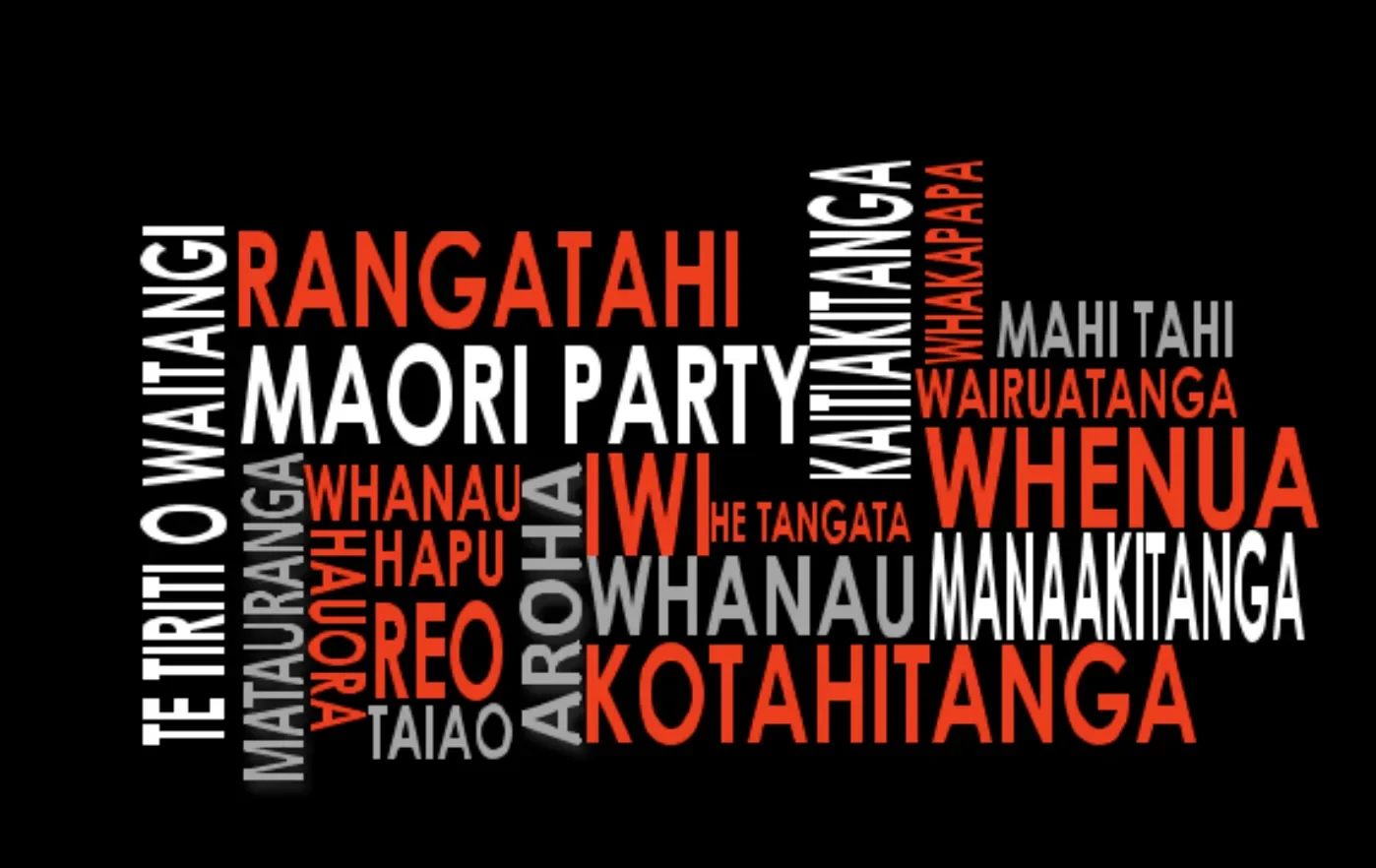
Those principles were grounded in the tanga that define who we are as Māori — whanaungatanga, manaakitanga, rangatiratanga, wairuatanga, kaitiakitanga, kotahitanga, and pono. They were not simply words, but the moral compass for how we were expected to lead and to serve.
Many of us came from different spaces — academia, unions, activism, and the arts — but we shared a single purpose. We organised, strategised, walked the streets, and built relationships across the motu.
For me, it was a natural extension of what I’d always believed: that the strength of our people lies in unity, and in standing unapologetically as Māori. That’s why I said yes that afternoon in Māngere — and why I still care so deeply about this kaupapa today.
But there was a personal cost.
When Power Is Used to Silence
The party had barely formed when I became the target of a public attack by John Tamihere, who accused me of using Department of Labour resources to support Te Pāti Māori. The claim was false, but the damage was real. It cost me my career as a senior public servant and placed enormous strain on my whānau.
Although he later withdrew the allegation and apologised, I took him to court for defamation — and I won. For me, it was about restoring my mana and defending my integrity.
It is not lost on me, all these years later, that the man who once accused me of wrongdoing for supporting the Māori Party is now its president. The irony is noted, but the lesson was enduring: power can be used not only to uplift, but to silence and intimidate.
Returning to the Movement
Years later, under the presidencies of Dame Naida Glavish and Tuku Morgan, I returned as the Party Secretary. Those were turbulent times — the split with Hone Harawira and the birth of the Mana Party tested our resolve and our unity. But through it all, the founders held fast to the belief that the movement was always bigger than any single personality or political calculation.
That belief was again tested when John sought the Tāmaki Makaurau candidacy for the 2020 general election. I opposed it. I knew that electorate well. When Papa Pita won it in 2005, it was wāhine Māori and rangatahi who carried him to victory. They recognised integrity, and a leadership style grounded in kaupapa.
John’s combative, anti-iwi, macho brand of politics appealed to a narrow audience — but not to the wāhine who move mountains in Māori politics. I warned that he would not win. He didn’t.
My deeper concern, however, was integrity. When I lodged a formal complaint about his candidacy, it was dismissed on a technicality: that his previous actions denigrating the party could not be considered because he wasn’t a financial member at the time. It was a constitutional loophole that protected power, not principle — and in time, it became a mechanism that allowed that imbalance to grow.
By that stage, John already had a well-known pattern of lawyering up when challenged — using legal threats to protect his position and deter criticism. So when I questioned his candidacy, that same approach surfaced again.
It reflected a leadership style quick to respond through legal avenues rather than engagement — a pattern also evident in his wider roles at the Waipareira Trust and the Whānau Ora Commissioning Agency, where defamation actions and judicial reviews became familiar tools of defence. It’s a litigious style that discourages dissent and creates fear where there should be dialogue.
For a kaupapa movement built on collective responsibility and kōrero that seeks to uplift rather than silence, this approach corrodes trust and weakens accountability.
(Examples of this approach are a matter of public record: Tamihere v MediaWorks (2014); Tamihere v NZME (2019–20); Whānau Ora judicial review (2025); and Waipareira Trust v Charities Board (2025).)
A Leadership Culture Gone Wrong
From my vantage point since, the same patterns have re-emerged: the silencing of dissent, the personal attacks, the selective storytelling. The email circulated to members, containing deeply personal and damaging claims about the Kapa-Kingi whānau, was not leadership — it was defamation masquerading as accountability.
There were no charges, no findings, no proof — only a one-sided account presented as fact. It was an attempt to destroy credibility rather than address substance.
This is not the tikanga-based leadership promised in our constitution. It reflects the politics of control, not of care.
After significant backlash from members, supporters, and Māori leaders across the motu— the party quietly issued a notice for an Annual General Meeting to be held in Rotorua in early December. On the surface, this might appear as an opportunity for renewal. But if the hui takes place under the same structures and personalities that have enabled this culture of fear and control, then little will change.
The events that have followed only reinforce that concern. Recently, statements issued in the name of the National Council claimed that formal resolutions — including the suspension of elected Te Tai Tokerau MP Mariameno Kapa-Kingi — had been passed. Yet under the party’s constitution, the Council cannot lawfully convene without representation from at least four Māori electorates and the required officers. My sources advise that this quorum was not met which is contrary to the public statement issued.
Given the nature of the decisions, each electorate would have been required under the party’s constitution to convene a properly notified hui of financial members — through its Electorate Council and branches — to confirm or mandate representatives prior to attending the National Council. My sources advised that no such hui were held, meaning those representatives lacked constitutional authority. As a financial member I definitely was not invited to any such meeting. This raises serious questions about the validity of the process and any resolutions made.
Acting without proper authority breaches both the constitution and the tikanga of whakawhitiwhiti kōrero. It replaces collective decision-making with control, and in doing so, erodes the trust of the people the movement exists to serve.
Restoring the Kaupapa
Renewal begins with remembering where we came from.
If Te Pāti Māori is to genuinely reset, it must go back to where it all began — to Whangaehu Marae, near Whanganui. It was there, twenty years ago, that we gathered around Tariana Turia to organise, to mobilise, and to celebrate her overwhelming victory in Te Tai Hauāuru. That hui marked the moment when the Māori Party’s kaupapa was first affirmed in the collective spirit of our people.
Returning there would not just be symbolic; it would be restorative. It would ground the movement once again in the wairua, courage, and kotahitanga that birthed it. It would remind us that this kaupapa was never about individuals, but about collective conviction and unity of purpose.
Otherwise, the reset will be little more than theatre — another exercise in control disguised as consultation.
The Kaupapa Demands Better
Māori are facing one of the most hostile governments in decades. Rights and protections fought for over generations are being dismantled at speed — from the MACA Amendment Bill, the Regulatory Standards Bill seeking to sideline Treaty obligations, to the erosion of equity in health and education.
The diminishing of te reo Māori in public institutions and media, the attempted removal of Māori language names from government agencies, and the retraction of pay-equity commitments for wāhine in essential sectors like health and social services are not isolated policy shifts — they are deliberate steps backwards.
Each one chips away at decades of progress our people fought for, and together they represent a wider assault on Māori advancement and mana motuhake.
Yet even amid the noise, we have seen what kaupapa leadership can look like. In the humility and grace of Hana-Rāwhiti Maipi-Clarke, who carries herself with aroha and courage far beyond her years. In the dignity and clarity of Oriini Kaipara’s maiden speech, grounded in whakapapa and hope. And in the quiet stoicism of Mariameno Kapa-Kingi, who has endured personal and political attacks with strength, restraint, and unwavering commitment to kaupapa. Together they remind us that true Māori leadership is not about power or profile, but about service — to our people, to te reo, and to the generations still coming.
These are the battles that demand our unity and focus. Yet the actions of the present leadership — contradictory to the kaupapa that once bound us — have instead created the internal conflict that has taken hold, just as Eru Kapa-Kingi has publicly observed.
In recent correspondence from party officials, the response to genuine questions of accountability has been to point to the number of seats won in the last election — described as the party’s best result in twenty years. But electoral success does not excuse a culture that contradicts the kaupapa. Winning six seats means little if the movement itself is losing its integrity. The measure of leadership is not how much power it holds, but how it uses that power — whether to strengthen the collective or to silence it.
Te Pāti Māori was never meant to be the property of any one person. It was built on collective leadership — kotahitanga, manaakitanga, and tino rangatiratanga.
Across the motu, electorates like Te Tai Tonga have already passed votes of no confidence in the current leadership. That is not rebellion; it is accountability. It shows the kaupapa is moving — with or without the permission of those who hold office.
The constitution is clear: three electorates can call a Special General Meeting. Two hundred members can sign a remit. The power sits with the people.
Time to Let the Kaupapa Breathe
I don’t take lightly the responsibility of writing this article — or the implications it may have for me and my whānau. For most of my life, I’ve preferred to work behind the scenes, contributing to kaupapa rather than seeking the spotlight. But there comes a time when silence feels like complicity, and integrity demands that we speak.
This is one of those times.
And this is not about revenge or personality. It is about restoring trust, integrity, and accountability to the party’s leadership.
John Tamihere, it is time to stand down.
It is time to release your grip on the party and allow it to breathe again. It is time to make space for new leadership grounded in humility and collective vision. Holding on in the face of such clear calls for accountability does not strengthen the movement — it weakens it.
Te Pāti Māori was never yours to own. It existed before you, and it will exist after you.
Your greatest act of leadership now would be to step aside with dignity and allow the party to find its way back to the principles it was founded upon.
As Māori, we know that healing requires honesty. Sometimes the wound must be opened so that the infection can drain and the flesh can heal.
He mamae te ngau, he rongoā te pono — the bite may hurt, but truth is the medicine.
This kōrero is not meant to divide, but to cleanse — to bring the truth to the surface so that the kaupapa might recover its mauri.
The kaupapa demands no less — and our people deserve no less.
Mauri ora.
Author Bio
Amokura Panoho (Te Atiawa, Taranaki, Ngā Ruahinerangi, Ngāti Mutunga, Ngāti Apakura, Ngāti Kahungunu me Rangitāne ki Wairarapa, Ngāi Tahu me Kāti Mamoe) was the inaugural Tāmaki Makaurau electorate secretary for Te Pāti Māori and later served as its National Secretary. She is a strategist, writer, and director of Kura Consulting.
Disclaimer
The views expressed in this article are solely those of the author and do not necessarily represent the views or positions of any organisations, boards, or entities with which she is or has been associated.